I run an SEO agency, so I have an obvious bias here. I’ll say the honest thing anyway: “give it more time” is sometimes a real answer, and sometimes it’s an excuse an agency reaches for because they don’t want to explain what they actually did with your first three months of retainer payments.
Both of those are true at the same time, which is exactly why “should I fire my agency at month 3” doesn’t have a single answer. It depends entirely on what happened during those three months, not on the calendar.
The real reason clients fire agencies isn’t what agencies think it is
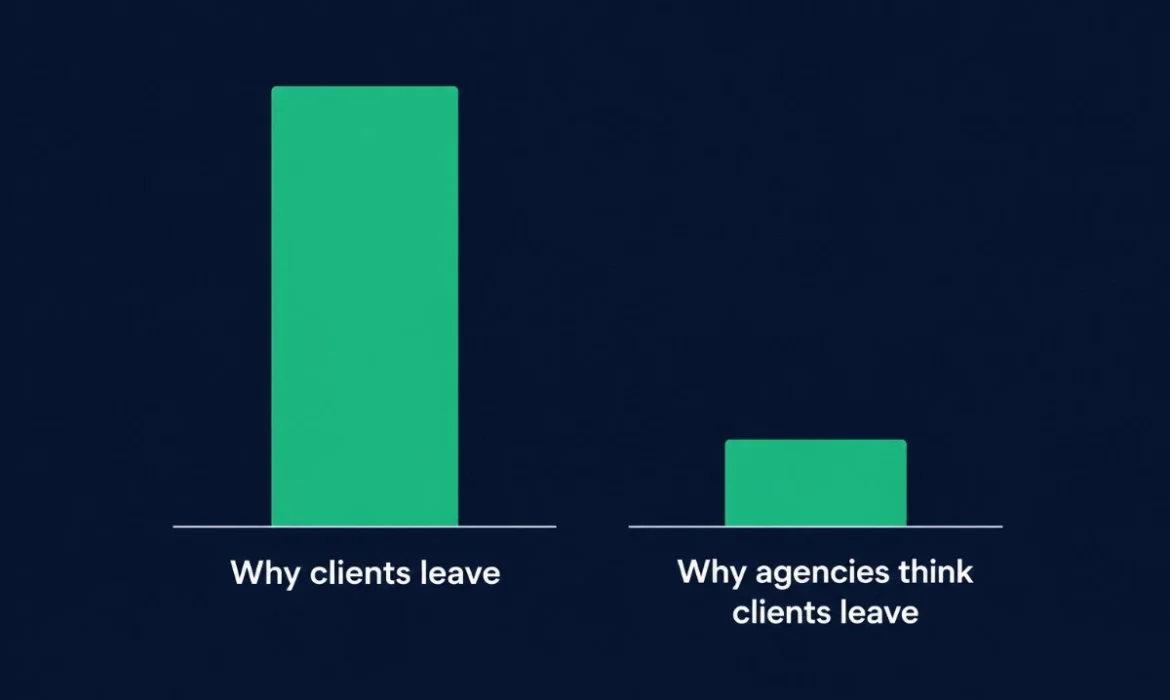
A 2026 industry study surveying 400+ brand and agency professionals found the number one reason clients end an agency relationship is dissatisfaction with delivery, cited by 48% of clients, up sharply from the year before. Agencies, when asked the same question about their own client losses, ranked delivery dissatisfaction seventh.
That gap is the whole story. Clients aren’t leaving mainly because rankings haven’t moved yet. They’re leaving because they don’t know what their agency actually did, and the agency has no idea that’s the problem. A separate study on agency terminations found that lack of transparency causes more terminations in the first six months than any other single factor, more than missed targets, more than price, more than even outright bad SEO practices.
So if you’re three months in and frustrated, the real question probably isn’t “has enough time passed.” It’s “do I actually know what’s been done for my money?” Those are very different problems, and only one of them is fixed by waiting longer.
Rankings at month 3 were never the right thing to measure anyway
Here’s the part that’s genuinely on the client side of this, not the agency side: 68% of SEO professionals report 6 to 12 months as the realistic window to see meaningful ROI, and the return curve isn’t linear either. Benchmark data shows returns growing from roughly 5:1 at month 12 toward 22:1 by month 24. If you’re expecting page-one rankings and a clear revenue lift by month 3, you’re measuring against a timeline that doesn’t exist for organic SEO, and no honest agency will promise you otherwise.
But “rankings take time” is not the same claim as “nothing measurable should have happened.” That’s the distinction that actually matters, and it’s the one most of these conversations skip past.
What should have actually happened by month 3
This is where I’ll speak from our own process rather than generic advice. Our internal workflow for a new client runs on a phased 12-week structure specifically because month 3 is a real checkpoint, not a random date. By the end of it, you should be able to point to specific, completed things, not vague reassurance:
- A completed technical SEO audit, with the fixable issues already fixed or actively in progress, not still “on the list.”
- A fully optimized Google Business Profile if there’s any local component to the business: categories, services, description, the whole profile, not a partial setup.
- Real keyword research that produced an actual content plan, not a generic list of high-volume terms copied from a tool.
- At least a handful of published pages or optimized existing pages, built from that keyword research.
- Baseline tracking properly set up: Search Console, analytics, rank tracking, so both of you have a real number to measure the next nine months against.
- A specific plan for months 4 through 12 that references your business, not a templated deck that could belong to any client.
None of that produces page-one rankings by itself. All of it is the foundation that determines whether rankings show up in month 6 or month 14. If your agency can walk you through this list with specifics, they’re doing the work, and the honest answer is to give the timeline the room it actually needs. If they can’t, that’s not a timeline problem.
The actual red flags, separate from “rankings haven’t moved yet”
- You genuinely don’t know what’s been done in the last three months beyond vague monthly reports.
- The reporting shows activity, blog posts published, links built, but never connects any of it to your actual goals or numbers.
- Every answer to “what’s the strategy” sounds interchangeable with what they’d tell any other client in your industry.
- There’s no baseline tracking in place, which means neither of you can actually measure progress even if you wanted to.
- Communication has been reactive; you’re the one chasing updates, not the other way around.
None of these require waiting past month 3 to notice. They’re visible immediately, and they’re a far better signal than rankings are this early.
So, should you fire them?
Not based on the calendar. Based on the checklist. If three months in you can point to real completed foundation work, a specific plan forward, and a clear line of communication, the frustration you’re feeling is about timeline expectations, not agency performance, and the fix is a direct conversation about what to expect by month 6 and month 12, not a termination. If three months in you genuinely can’t describe what’s been done or why, that’s not an SEO timeline problem. That’s a transparency problem, and those don’t get better with more months; they just get more expensive.
The month isn’t the signal. What actually happened during it is.
If you’re not sure whether what’s happened with your current SEO setup matches what should have happened by now, that’s exactly the kind of audit conversation we have with businesses at Elysian Digital Services before they decide anything.