Every few weeks, someone asks me whether Featured Snippets are “dead” now that AI Overviews exist. The honest answer is no, but the confusion is fair, because these two look similar on the surface and get talked about interchangeably in half the SEO content out there. They are not the same thing, and treating them as the same thing is exactly why so much SEO advice on this topic ends up vague.
Let’s fix that.
What a Featured Snippet Actually Is
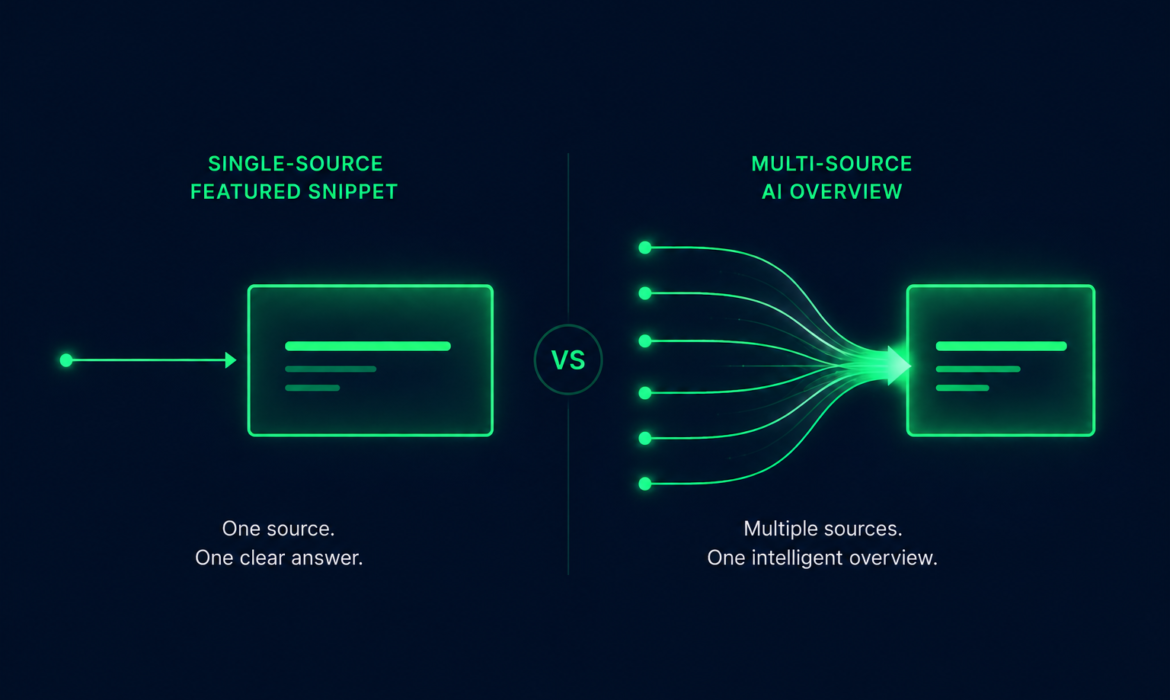
A Featured Snippet is the highlighted box that sits at the top of Google’s results, often called position zero. It pulls a short piece of text directly, word for word, from one specific webpage that Google has decided is the best answer to that query.
Nothing is rewritten. If your page is the source, your exact sentence is what shows up, usually with your URL right underneath it. This has been part of Google search since 2014, so it is not new; it is just been pushed down the page by something newer.
What an AI Overview Actually Is
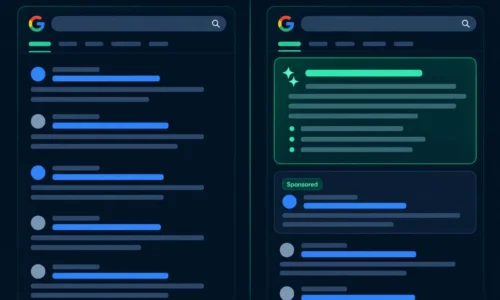
An AI Overview is different in a way that matters more than most people realise. Instead of lifting a sentence from one page, Google’s AI reads through multiple sources, then writes an original summary in its own words, blending information from all of them into one answer.
Your content might be one of the sources it drew from, and your link might show up in the “sources” section beside the summary. But the actual sentence a user reads was not written by you; it was generated by Google’s AI based on what it interpreted from several pages at once.
That single distinction, extracted verbatim from one source versus synthesized from many, explains almost every other difference between the two.
The Real Differences That Matter
Here’s where I want to be straight with you, because there’s a lot of inflated data circulating on this topic and it’s worth knowing what’s actually solid.
Source count and format. Featured Snippets quote one page exactly. AI Overviews blend several, then rewrite the answer entirely in Google’s own language.
How much real estate they take up. Featured Snippets are a single, compact box. AI Overviews are usually a much larger module that pushes everything else, including snippets, further down the page.
Traffic impact, and this is where I’d be cautious of confident-sounding numbers. Some sources claim AI Overviews now cover over 40% of searches with massive CTR drops attached. The more current and verifiable figures I’ve found put AI Overview coverage closer to 16 to 25% of searches depending on the month measured, with real but query-dependent traffic impact rather than a flat, universal number. If you see a guide quoting a huge, dramatic statistic with no source behind it, treat it with some skepticism. The trend is real. The exact size of it is still being measured, and it moves month to month.
What earns you a spot in each. Featured Snippets reward clean formatting, direct answers to specific questions, and exact-match structure. AI Overviews reward something closer to what I’ve written about in how to get cited by ChatGPT: clear, well-structured, trustworthy content that AI systems can confidently pull facts from and attribute correctly, not just content that matches a keyword.
Can You Win Both at Once?
Sometimes, but not automatically, and this is the part most guides get wrong by staying vague on it.
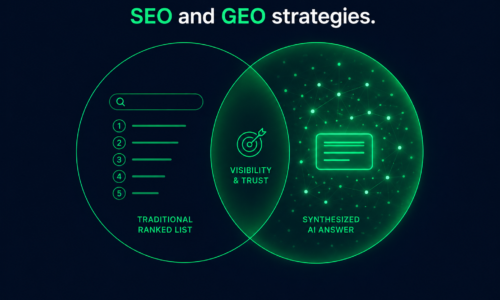
Ranking for a Featured Snippet does not guarantee an AI Overview citation, because they reward different things. A page can have perfect snippet formatting and still get skipped by an AI Overview if the content lacks the depth or authority signals the AI is looking for. The reverse also happens: a page cited inside an AI Overview might never win the Featured Snippet for that same query.
That said, the content habits that help you win one usually help with the other; they are just not identical. Clear structure, a direct answer near the top of the page, genuinely accurate information, and strong topical authority give you a real shot at both. If you’ve already been checking whether your content is showing up in AI-generated answers at all, my guide on checking if Google is citing your website in AI Overviews is the natural next step after this one.
So Which Should You Actually Target?
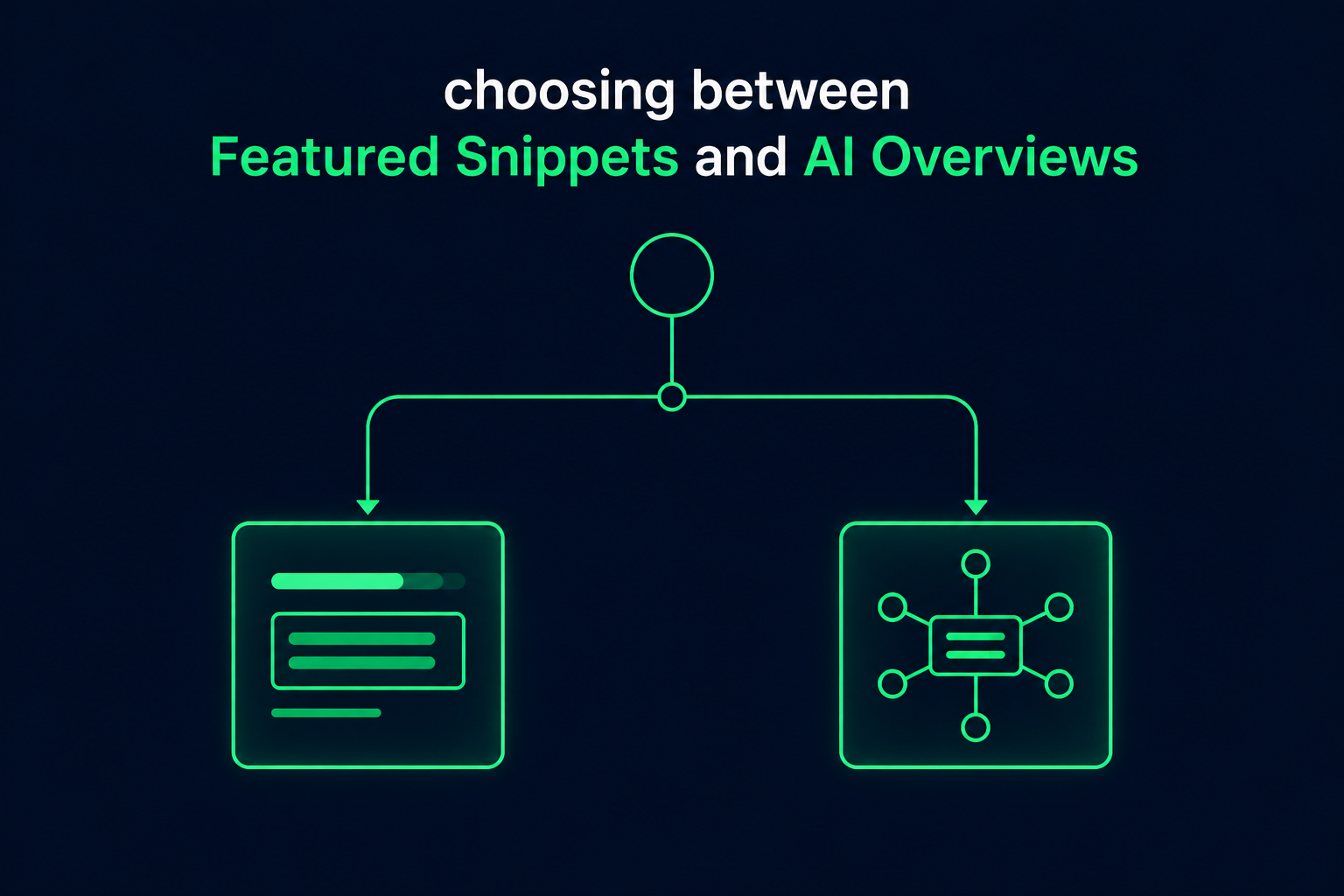
Here’s the practical framework, because “it depends” is not useful advice.
Target Featured Snippets when: Your query is a short, specific, factual question with one clean answer. Definitions, quick how-tos, single-number stats. These are exactly the queries where a concise, well-formatted page still wins position zero reliably.
Target AI Overviews when: Your query is broader, exploratory, or comparison-based, the kind of question someone asks because they want to understand something, not just get one fact. These are the queries where synthesis genuinely helps the user, and where Google leans on AI Overviews most heavily.
If you only have limited effort to spend: Structure your content to answer the specific question clearly and early, exactly what a Featured Snippet needs, and then build out depth, sourcing, and clarity around it, exactly what an AI Overview needs. This is not two separate strategies. It is one strategy done properly, and it happens to give you a shot at both.
The Bottom Line
Featured Snippets are not dead, and AI Overviews are not universally reducing everyone’s traffic by some dramatic fixed percentage, no matter how many guides throw around a big scary number without a source. What is true is that the game has genuinely split into two different mechanisms, one that rewards precision and one that rewards depth and trust, and understanding which one you’re actually optimizing for changes how you should write.
Stop treating them as the same target. Structure your content for clarity first, depth second, and you’ll have a real shot at both.
If this kind of clear-headed breakdown is useful, follow along; I write about exactly this stuff.