
Let me start with a story that still surprises people when I tell them.
A few months ago, we started working with a gun store in Thomasville, Georgia. Now, if you know anything about this industry, you know it is one of the hardest niches to market. You cannot run normal ads. A lot of platforms restrict you. Google is careful with you. It is a tough space to get visibility in.
So when the owner asked me if we could get them showing up when someone asks ChatGPT “gun stores in Thomasville, GA,” I was honest with him. I said, let us try; this is new territory for everyone, but the fundamentals should still work.
Three months later, Golden Brothers is showing up in ChatGPT for that exact local search, right there on the map with a 4.7 rating, listed as a long-established local gun shop. And their Google Search Console numbers went from 286 clicks and 2,320 impressions in the previous three months to 3,060 clicks and 254,000 impressions in the last three months. That is more than a 10x jump in clicks and over 100x in impressions.
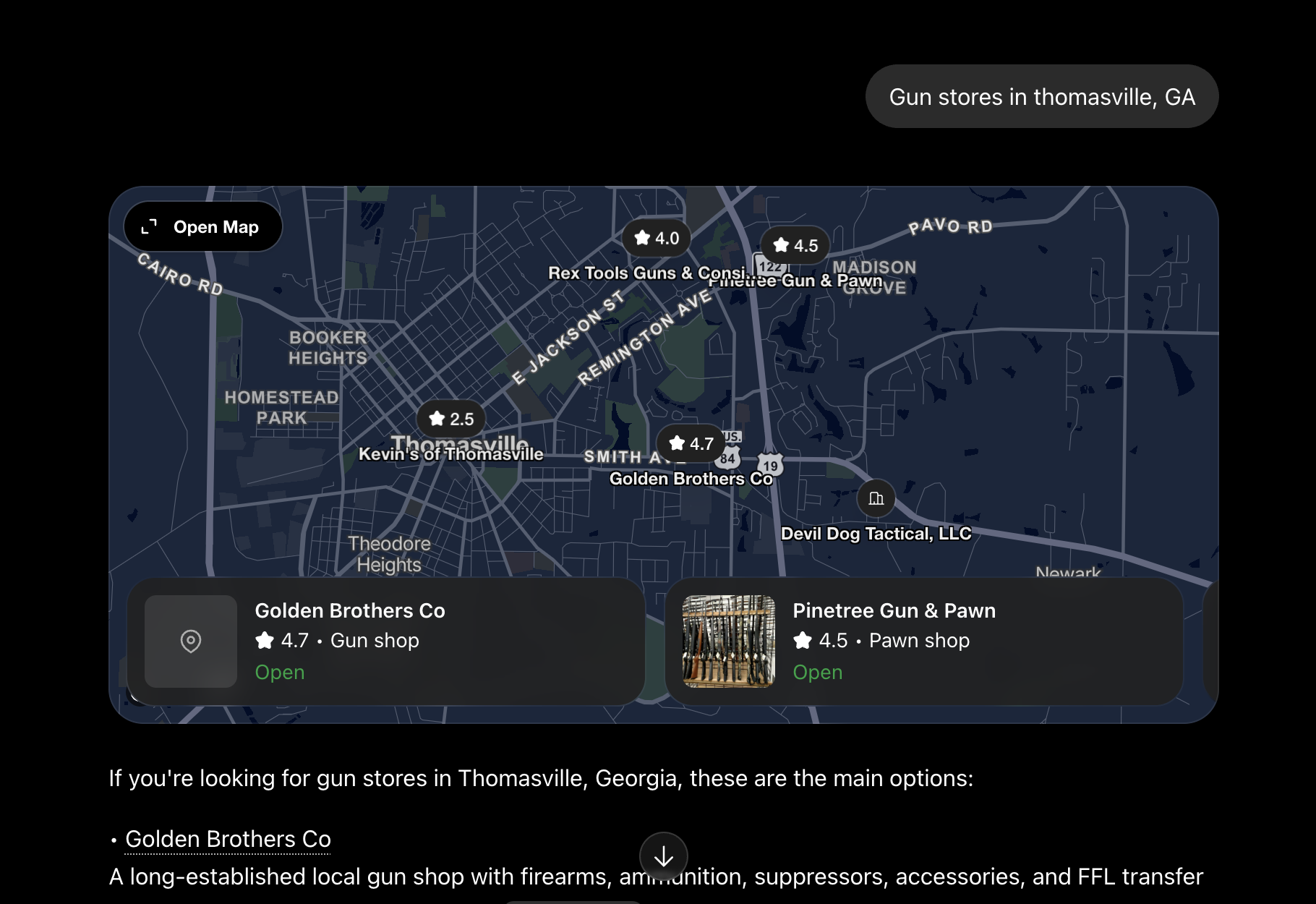
I am sharing this because getting cited by ChatGPT is not some magic trick reserved for big brands with huge budgets. A local gun store in Georgia did it. And in this guide, I am going to walk you through exactly how it works, in simple language, whether you are an SEO expert or a business owner who has never touched this stuff before.
This is the article I have been promising in my last few posts. So let us get into it.
First, Where Does AI Actually Get Its Information From?
Before you can get cited by ChatGPT, you need to understand where these AI tools actually pull their answers from. Because if you do not know the sources, you cannot get yourself into them.
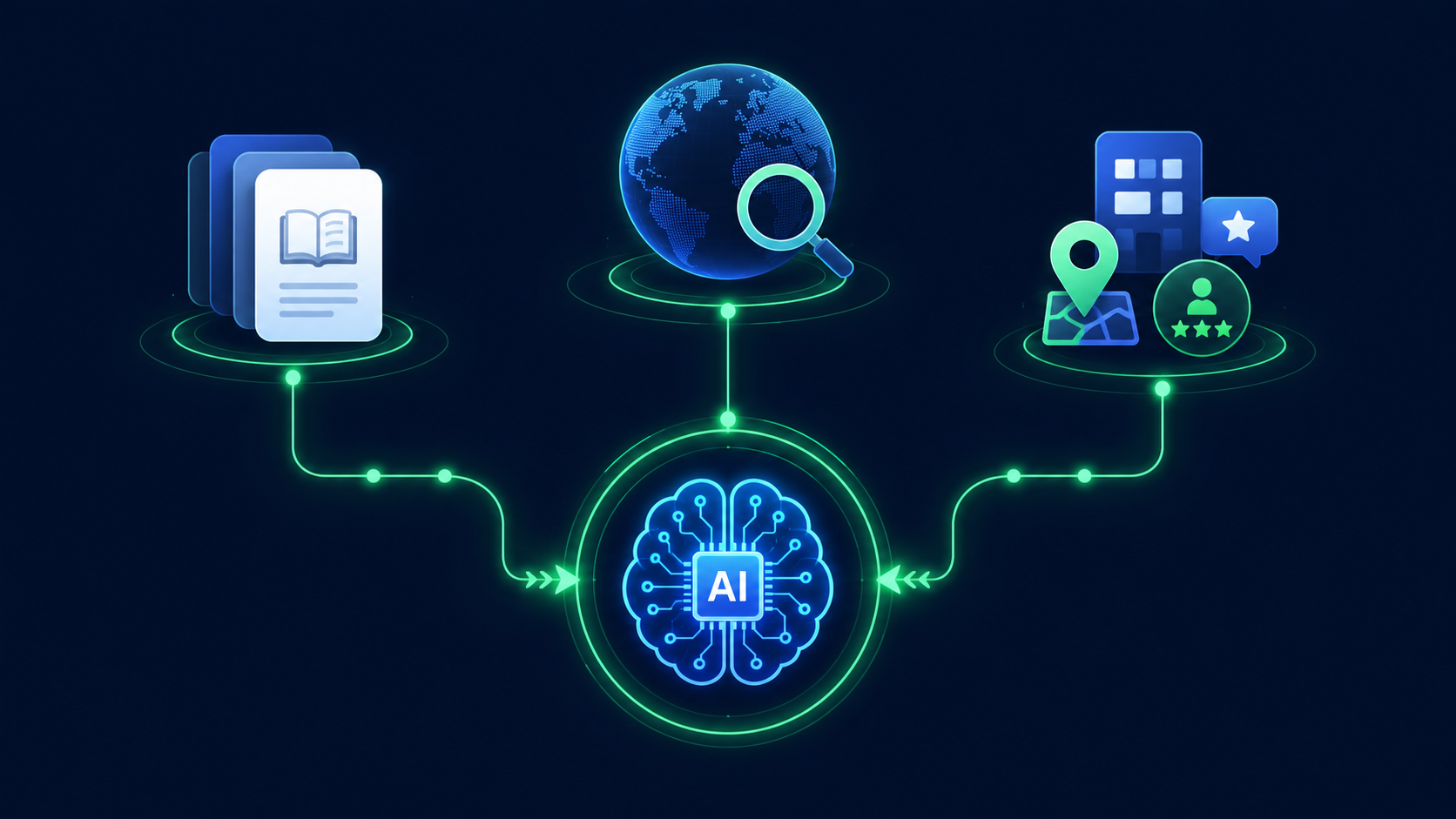
There are basically three places AI tools like ChatGPT, Gemini, and Perplexity get their information.
- Training data. This is the huge amount of text the AI learned from when it was built, a big chunk of the public internet up to a certain date. This is why ChatGPT sometimes knows about your business even without searching, if you have been mentioned enough across the web.
- Live web search. Most AI tools now search the web in real time when you ask them something current. ChatGPT search, Perplexity, and Google AI Overviews all do this. They send out a query, pull back relevant pages, and use those to build the answer. This is where good SEO directly helps you.
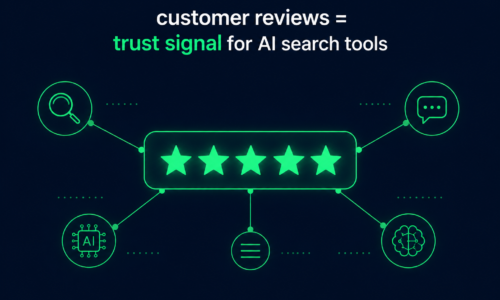
- Third-party sources and structured data. This is the part most people miss. AI tools lean heavily on trusted third-party platforms, business directories, review sites, maps data, Wikipedia, Reddit, and industry-specific listings. For Golden Brothers, a big part of getting cited was making sure they were present and consistent across the sources ChatGPT actually trusts for local business information.
So the simple takeaway is this. To get cited, you need to be present in these sources, be consistent across them, and give the AI content it can easily read, trust, and pull from.
Let me show you how to do each of those.
How ChatGPT Decides What to Cite
Here is the thing that took me a while to fully understand, and it is important.
ChatGPT and other AI tools are not ranking pages the way Google traditionally does. They are looking for content they can confidently quote. There is a difference.
There was a really useful study by Search Engine Land where they audited nearly 2 million sessions to see what actually gets cited by ChatGPT. The single biggest finding was that content with what they called an answer capsule, a short, clear, self-contained answer of about 20 to 25 words placed right after a heading, was the strongest predictor of getting cited. Around 72% of cited posts had one.
The second finding was even more interesting. Those answer capsules performed best when they had no links inside them. More than 9 in 10 cited capsules were completely link-free. The idea is that a clean, self-contained block of text is easy for the AI to lift out and attribute to you. A block full of links looks like a signpost pointing somewhere else.
So lesson one for getting cited. Answer the question clearly and quickly, right at the top, in a clean block the AI can easily grab.
The Content Traits That Get You Cited
There is solid research on this now, not just guesswork. A well-known study from Princeton and Georgia Tech tested different content tactics across thousands of queries and measured which ones actually increased AI citations. Here is what worked, in plain terms.
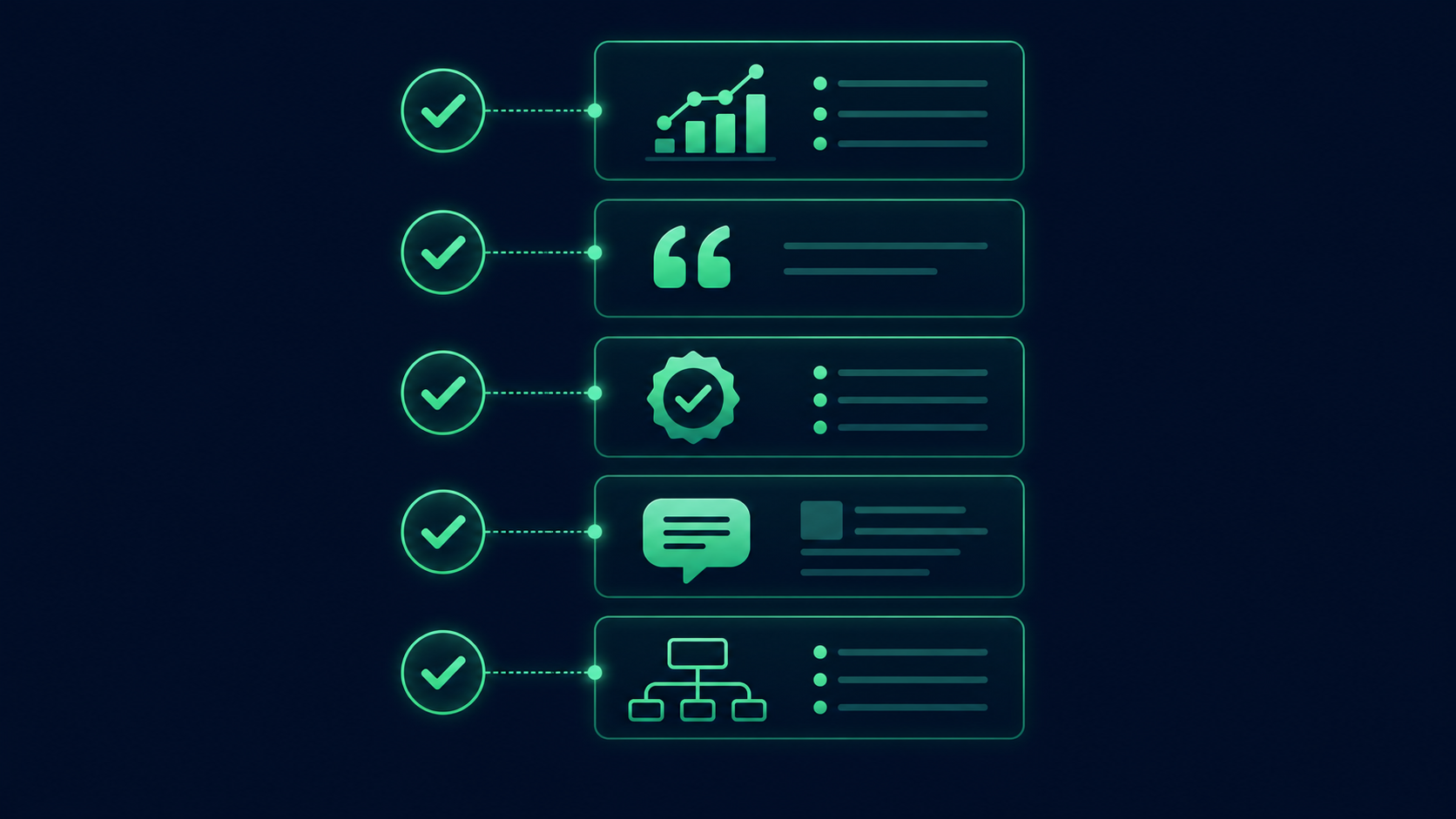
Add real statistics. Content with specific, verifiable numbers got a big lift in visibility, around 40%. So instead of saying “our client saw a big increase in calls,” you say “calls increased by 88.6% year over year.” The specific number gives the AI something concrete to quote.
Cite authoritative sources. When your content references real research and trusted sources, AI treats it as more credible. This also gave around a 40% lift. Link to the original study, not a blog summarising it.
Add expert quotes. Named experts with real credentials outperformed anonymous claims, around a 35% lift. This is exactly why writing in my own name, as an SEO specialist with almost a decade of experience, helps my content get cited. The AI sees a real expert behind it.
Answer first, explain later. Put your main answer at the very top, then explain below it. Pages that do this get cited far more often than pages that make you read five paragraphs before getting to the point.
Use clear headings and structure. Proper headings, short paragraphs, one idea at a time. This makes it easy for the AI to pull out just the section it needs.
If you look at my own articles, you will notice I follow these exact rules. That is not a coincidence. It is why they are ranking and getting cited so quickly.
Step by Step: How to Get Your Website Cited by ChatGPT
Alright, let me put this all together into an actual plan you can follow. This is basically what we did for Golden Brothers.
Step 1: Make sure AI can actually access your website.
This sounds obvious, but it is the number one reason businesses do not get cited. AI tools use crawlers, little bots, to read your site. If your website is blocking them, you are invisible before you even start.
There is a file on your website called robots.txt. You want to make sure it allows the main AI crawlers, things like GPTBot and OAI-SearchBot from ChatGPT, PerplexityBot from Perplexity, and Google-Extended for Gemini. If you are not technical, just ask your developer to confirm these are allowed. This one fix alone unblocks a lot of businesses.
Step 2: Get your business into the sources AI trusts.
Remember the third source of AI information I mentioned earlier. For a local business, this means your Google Business Profile, your listings on directories, review sites, and any industry-specific platforms need to be complete, accurate, and consistent.
For Golden Brothers, we made sure their name, address, and phone number were identical everywhere, their Google Business Profile was fully optimised, and they had genuine reviews. When ChatGPT looked for gun stores in Thomasville, the data it pulled was consistent and trustworthy, so it felt confident recommending them.
Step 3: Write content that answers real questions clearly.
Take the actual questions your customers ask and answer them directly on your website. Put the answer right at the top, short and clear, then explain below.
If someone might ask, “Do you do FFL transfers in Thomasville” then have a page or a section that answers exactly that, straight away, in plain language. That clean, direct answer is what AI loves to quote.
Step 4: Add real data and specifics.
Wherever you can, use real numbers, real examples, real details. Specific beats vague every single time when it comes to AI citations. This is also just good honest marketing.
Step 5: Build your authority and trust signals.
This is the long game, but it matters most. Get mentioned on other trusted websites. Local news, industry blogs, directories, press about your business. The more the wider web talks about you consistently, the more AI trusts you as a real, established business worth recommending.
Step 6: Add structured data (schema markup).
This is code on your website that spells out for the AI exactly what your business is, where you are, what you offer, and answers to common questions. FAQ schema in particular is powerful; pages with it are far more likely to show up in AI answers. Your developer can add this, or if you use WordPress, a plugin like Rank Math can help.
Step 7: Track it and keep improving.
Search for your business in ChatGPT and Gemini regularly. Ask them the questions your customers would ask. See if you show up. Watch your Search Console numbers. This is how we knew Golden Brothers was working; we could see it happening in real time. If you want a proper system for this rather than just spot-checking, I put together a full guide on how to track your AI search visibility, including the free methods and the metrics that actually matter.
Getting Cited on Gemini, Perplexity, and Google AI Overviews
ChatGPT is the big one, but the same core work helps you across all the AI tools, with a few small differences worth knowing.
Perplexity is usually the fastest to cite you because it searches the live web on almost every query. If you already rank well on Google and your site is crawlable, you often show up on Perplexity first, sometimes weeks before ChatGPT catches up.
Google AI Overviews lean heavily on content already ranking in Google, so your traditional SEO directly feeds your AI Overview visibility. Good rankings plus clear, quotable content is the winning combination here.
Gemini pulls strongly from your Google Business Profile and the wider Google ecosystem, so for local businesses, a well-maintained GBP is even more important for Gemini visibility.
The good news is you do not need a totally separate strategy for each one. Do the core work well, be present in trusted sources, write clear quotable content, build real authority, and you improve across all of them at once. That is exactly what happened with Golden Brothers.
Grab the Free Checklist
I know this is a lot to take in, especially if you are newer to this. So I have put together a simple, step-by-step AI Citation Checklist that turns everything in this article into a straightforward list you can actually work through for your own business.
It covers the crawler access checks, the content structure, the trust signals, and the tracking, all in plain language, no jargon.
It is completely free. Just drop your email here, and I will send it straight to your inbox. I am building out a whole set of these practical resources for people serious about winning in AI search, and subscribers get them first.
The Bottom Line
Here is what I want you to take away from all this.
Getting cited by ChatGPT and other AI tools is not luck, and it is not reserved for big brands. It comes down to a few clear things done well. Making sure AI can access your site. Being present and consistent in the sources AI trusts. Writing clear content that answers real questions right at the top. Backing it with real data and real authority. And keeping track of how you are doing.
Golden Brothers is proof this works even in one of the hardest niches out there. A local gun store in Georgia now shows up when people ask ChatGPT for gun stores in their town. If they can do it, most businesses can.
The businesses that start doing this now, while most of their competitors do not even understand it yet, are the ones that will own their space in AI search for years to come. That window is open right now.
If you want help getting your own business cited, or you just want that free checklist to do it yourself, subscribe to my email list here and let us get started.
FAQs
How long does it take to get cited by ChatGPT?
In my experience, it can happen faster than people expect. For Golden Brothers, we started seeing real movement within about three months. If your site is already crawlable and you have some existing authority, it can be quicker. If you are starting from scratch, it takes a bit longer to build the trust signals, but three to six months is a realistic window for most businesses that do the work properly.
Can I pay ChatGPT to cite my business?
No, and be careful of anyone who tells you otherwise. As of 2026, there is no paid placement in organic AI citations. You earn them through content quality, technical accessibility, consistent presence across trusted sources, and real authority. That is actually good news; it means small businesses can compete on merit.
Do I need a website to get cited, or is my Google Business Profile enough?
You really want both. Your Google Business Profile is essential for local AI citations, especially on Gemini and for map-based answers. But your website is where AI reads your detailed content, checks your authority, and pulls specific answers from. The two work together. Golden Brothers had both working in sync.
My business is in a restricted or difficult niche. Can this still work?
Yes. Golden Brothers is a gun store, one of the most restricted niches for advertising there is, and it still worked. Because AI citations are earned through trust and relevance rather than paid ads, difficult niches can actually benefit more, since fewer competitors understand how to do this yet.
What is the single most important thing to do first?
Make sure AI crawlers can actually access your website. Check your robots.txt allows the main AI bots. It sounds basic, but a huge number of businesses are accidentally blocking the very bots they need, and no other optimisation matters until that is fixed.