Yesterday, I wrote about why websites are ranking on Google but losing traffic – and how Google AI Overviews are quietly absorbing clicks that used to go to your site.
If you haven’t read that yet, here’s the full breakdown. It’ll give you important context for what I’m about to share.
But here’s the part that surprised even some of my more experienced clients when I told them: not everyone is losing.
There’s one category of business that AI Overviews are largely leaving alone – and if you’re a local business, this might be the most important thing you read about SEO in 2026.
The AI Overview Problem, Quickly Recapped
When someone searches for “how does home loan approval work” or “what is a trust fund,” Google now answers that question directly on the results page using an AI-generated summary. The user reads it and moves on. Your website never gets the click, even if you’re ranking in position one.
Studies show AI Overviews reduce organic clicks by 38% on searches where they appear, and up to 58% CTR drop for top-ranking pages in some niches. Right now, approximately 65% of all Google searches end without a single website click.
That’s the bad news for informational content. But here’s where it gets interesting for local businesses.
Why Local Search Is Different
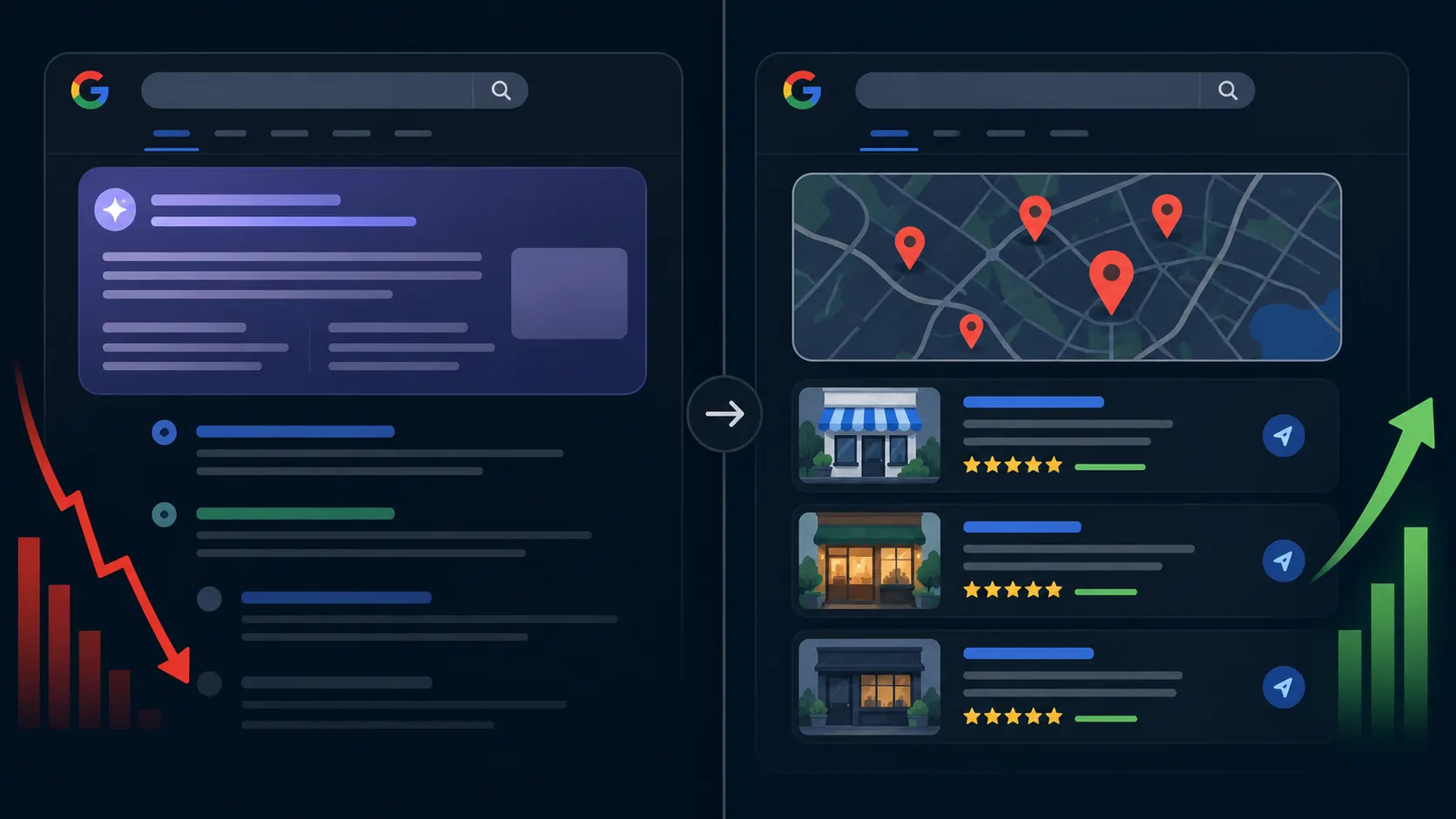
When someone searches “plumber in Delhi,” “home builder Melbourne,” or “dentist near me,” something different happens.
Google doesn’t generate an AI summary telling them how plumbing works. It shows them a map. It shows them business listings, reviews, phone numbers, and directions. Because the user doesn’t want information, they want a business. And AI can’t replace that.
According to data from Stackmatix, only around 4% of local service searches trigger AI Overviews. Compare that to over 40% for health content and a significant portion of how-to and educational content.
That’s a massive difference. And it means local SEO is genuinely one of the safest places to be right now in search.
But “safe” doesn’t mean untouchable. Here’s what’s actually happening beneath the surface.
How AI Overviews Are Affecting Local Search (And How They Aren’t)
Let me be clear about what’s happening and what isn’t.
What AI Overviews are NOT doing to local search:
They are not replacing the local pack – the map and business listings that appear when someone searches for a service near them. That still works the way it always has. If your Google Business Profile is strong, you still show up. People still call. People still visit.
What AI Overviews ARE starting to do:
They are beginning to appear on broader local queries. Searches like “how much does a kitchen renovation cost in Sydney” or “what should I look for in a local accountant” are increasingly triggering AI summaries. These are informational queries with local intent — and that’s where the lines are starting to blur.
If your local SEO strategy relies heavily on informational blog content to drive local leads, that part of your funnel is at risk.
The safest businesses are those with strong, well-optimised Google Business Profiles, consistent local citations, and a healthy volume of genuine reviews. That’s where your energy should go right now.
How to Optimise Your Local SEO to Stay Visible in the Age of AI
Before we go deeper, I want to be upfront: this is a quick overview of the key areas to focus on. I’m working on a full, detailed guide that walks through each of these steps with examples and checklists- and I’ll be sending it exclusively to my email list first.
If you want to be the first to get it, subscribe here and I’ll send it directly to your inbox.
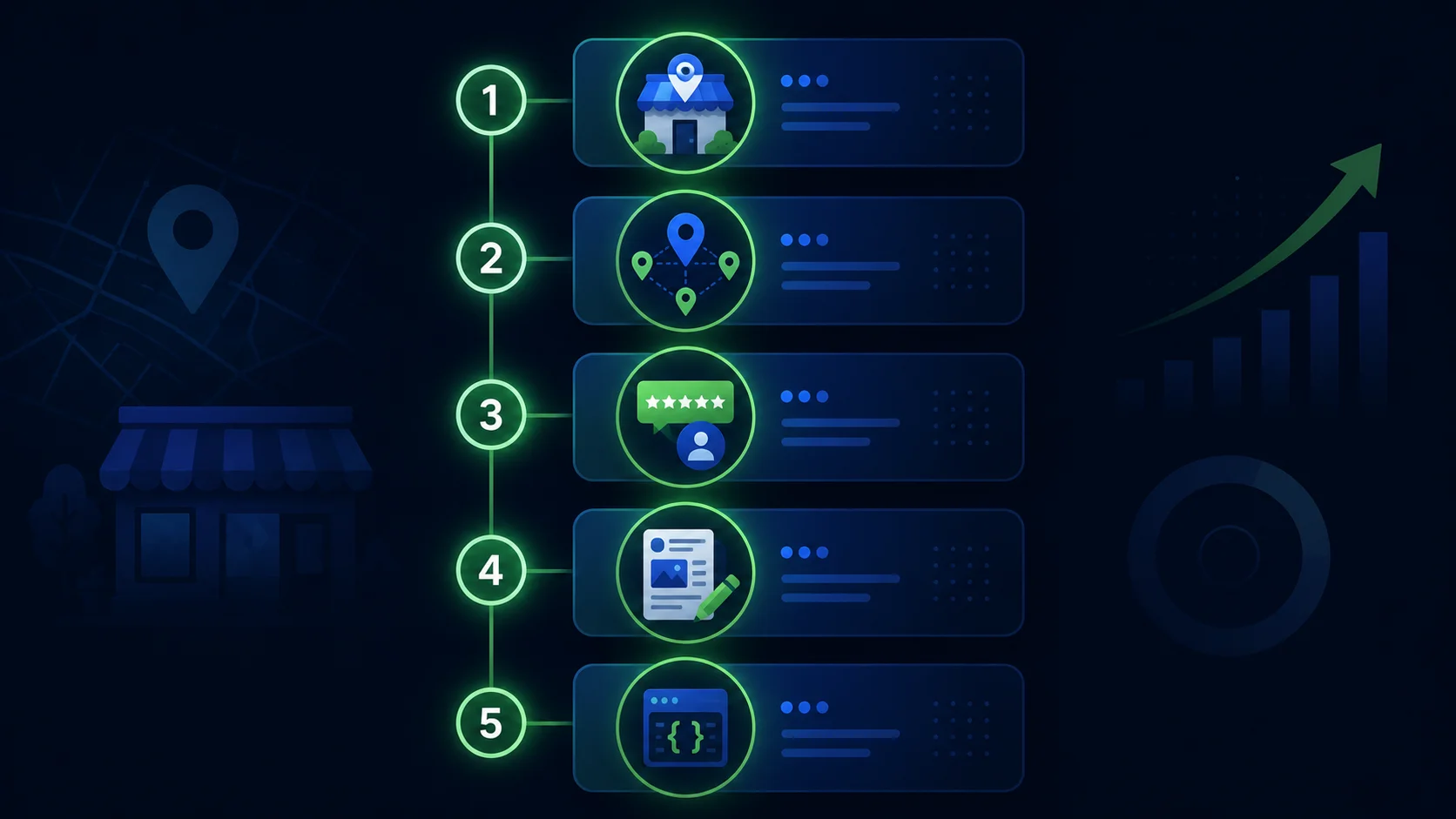
Here’s the short version for now:
1. Make your Google Business Profile your priority
Your GBP is the single most important asset for local visibility right now. Fill out every section – services, business description, attributes, hours, and photos. Post updates regularly. The businesses Google recommends in local results are the ones with complete, active profiles.
2. Get consistent citations across directories
Your business name, address, and phone number (NAP) should be identical across Google, Yelp, Justdial, Sulekha, and any industry-specific directories. Inconsistencies confuse Google’s understanding of your business and can quietly hurt your local rankings.
3. Build a review strategy – not just a star rating
AI doesn’t just read your star rating. It reads the text of your reviews, looking for recurring themes. If multiple customers mention “fast response” or “transparent pricing,” Google associates those qualities with your business. Encourage specific, detailed reviews- and respond to every single one.
4. Create locally targeted content
Write content that answers real questions local customers are asking. “How much does it cost to build a house in Melbourne in 2026?” or “What questions should you ask a home builder before signing?” These aren’t just good for SEO — they position you as the local expert AI Overviews might actually cite.
5. Use structured data (schema markup)
Adding Local Business schema to your website tells Google exactly who you are, where you operate, and what you offer – in a format AI can easily read and reference. This is a technical step your developer can implement, and it’s becoming increasingly important as AI-driven search evolves.
The full guide will go much deeper into each of these – with real examples, tools, and a step-by-step checklist. Subscribe to my email list, and you’ll get it as soon as it’s live.
What Local Businesses Should Do Right Now
Beyond the optimisation checklist above, here’s the strategic direction I’m giving my clients in 2026.
Double down on your Google Business Profile. This isn’t something to set up once and forget. Treat it like a live channel. Post weekly updates. Add new photos. Answer questions in the Q&A section. The businesses showing up in Google’s local results are consistently the ones keeping their profiles fresh and active.
Target hyper-local, high-intent keywords. “Plumber near me” and “home builder in [your suburb]” are still sending traffic. These searches are largely untouched by AI Overviews. Build service pages that target your specific locations – not just your city, but the suburbs and neighbourhoods you actually serve.
Collect reviews like it’s part of your business process. It should be. After every completed job, every satisfied client, every positive interaction – ask for a review. Not because it looks good, but because it’s now a ranking signal that AI actively reads and uses to understand your business.
Don’t abandon content – redirect it. Instead of writing generic how-to guides that AI will absorb, write content that demonstrates your local expertise and real-world experience. Case studies of local projects. Breakdowns of local market conditions. Content that only someone operating in your specific area could write. AI can summarise generic content. It can’t replicate genuine local knowledge.
Build your email list in parallel. I’ve said this before, and I’ll keep saying it – the businesses least affected by every Google change are the ones that built an audience they own. Your email list is yours. Google can’t take it away.
The Bigger Picture
Here’s what I keep reminding my clients: AI Overviews were designed to answer questions. Local search was designed to connect people with businesses. Those are two different things, and Google knows it.
When someone in Melbourne is ready to hire a builder, they don’t want an AI summary. They want to see who’s nearby, what their reviews say, and how to get in touch. That’s a human decision, and it still requires a local business to show up.
But “showing up” in 2026 means more than just having a listing. It means having a complete, active, trusted profile that Google’s AI can read and confidently recommend. The businesses investing in that now are the ones that will be protected – not just from AI Overviews, but from whatever comes next.
FAQs
1. How do I know if AI Overviews are appearing for my local keywords?
Search your target keywords manually in an incognito window and check whether an AI-generated summary appears above the local pack. You can also use tools like Google Search Console to monitor CTR drops on keywords where your impressions are holding steady.
2. Does having a website matter for local SEO if my Google Business Profile is strong?
Yes, your website still matters. Google cross-references your GBP with your website to verify consistency and authority. A website with locally targeted service pages, schema markup, and genuine content strengthens your overall local presence significantly.
3. How often should I post updates on my Google Business Profile?
At least once a week. Regular posts signal to Google that your business is active. Use them to share offers, completed projects, client wins, or local news relevant to your industry, anything that keeps your profile fresh and engaged.
4. Does the number of reviews matter or just the quality?
Both. Volume shows consistent customer engagement, while quality, meaning detailed, specific review text, gives Google’s AI more data to understand what your business does well. Ideally, you want a steady flow of new reviews, not a one-time burst.
5. Can a small local business compete with larger chains in local search?
Yes, and local SEO is one of the few areas where small businesses genuinely have an advantage. Proximity, review authenticity, and community relevance all work in favour of independent local businesses, factors that larger chains often struggle to replicate at a local level.