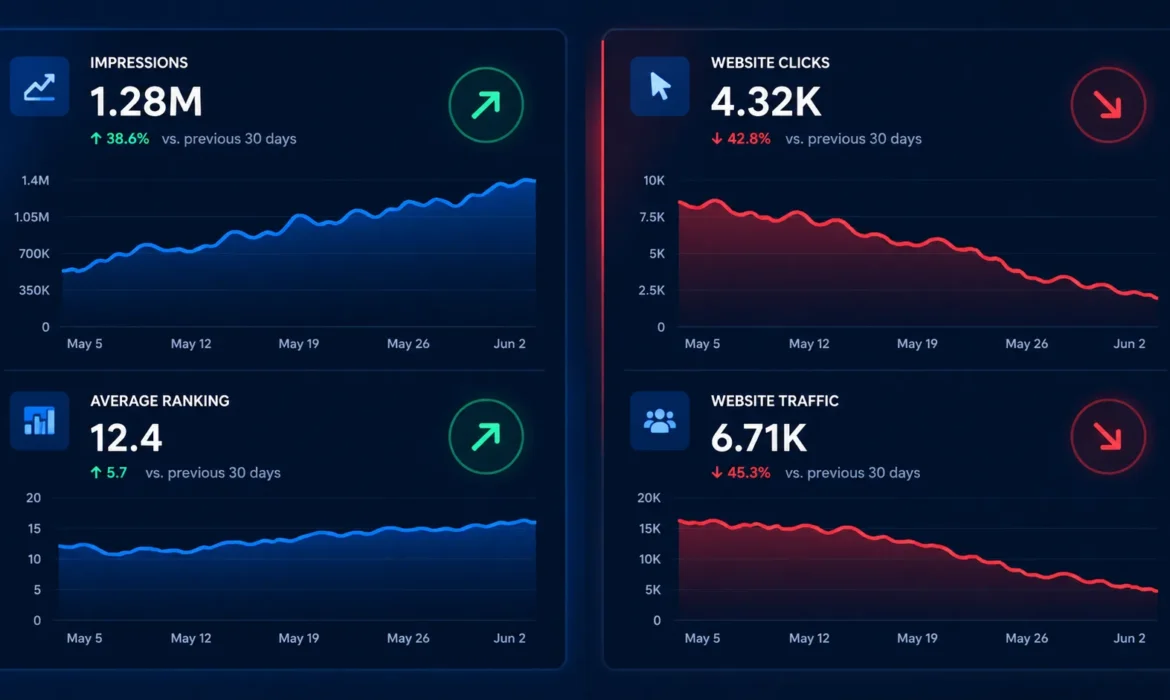
A few months back, I was reviewing the Google Search Console data for one of my clients, a home builder based in Melbourne, Australia.
Everything looked fine on the surface. Rankings were holding. Impressions were actually going up. But when I looked at the clicks column, something felt off.
Traffic had dropped. Not a little. Significantly.
My first instinct was to check for a penalty. Algorithm update? Technical issue? Crawl problem? Nothing.
The site was ranking. Google was showing it to people. But nobody was clicking.
That’s when it hit me, this wasn’t my client’s website problem. This wasn’t even an SEO problem in the traditional sense. This was something much bigger that’s quietly reshaping how search works in 2026.
It’s called zero-click search, and if you have a website, you need to understand what’s happening right now.
What Is Zero-Click Search?
A zero-click search happens when someone searches on Google and gets their answer directly on the results page, without clicking on any website at all.
You’ve seen this happen. You search “what is the capital of France,” and Google just tells you, Paris. No click needed. That’s a zero-click search.
For years, this only happened with simple factual queries. Weather, currency conversions, sports scores. Nothing that really affected most businesses.
But in 2024, Google rolled out something called AI Overviews, and that changed everything.
AI Overviews are AI-generated summaries that appear at the very top of Google’s search results. Google’s AI reads multiple websites, pulls information from them, and writes a complete answer right there on the page. The user reads it and moves on, without visiting a single website.
The result? Websites are ranking perfectly fine, getting thousands of impressions, but getting far fewer clicks than they used to.
And this isn’t just happening in the home building niche. I’m seeing it across the board.
The Numbers Are Hard to Ignore
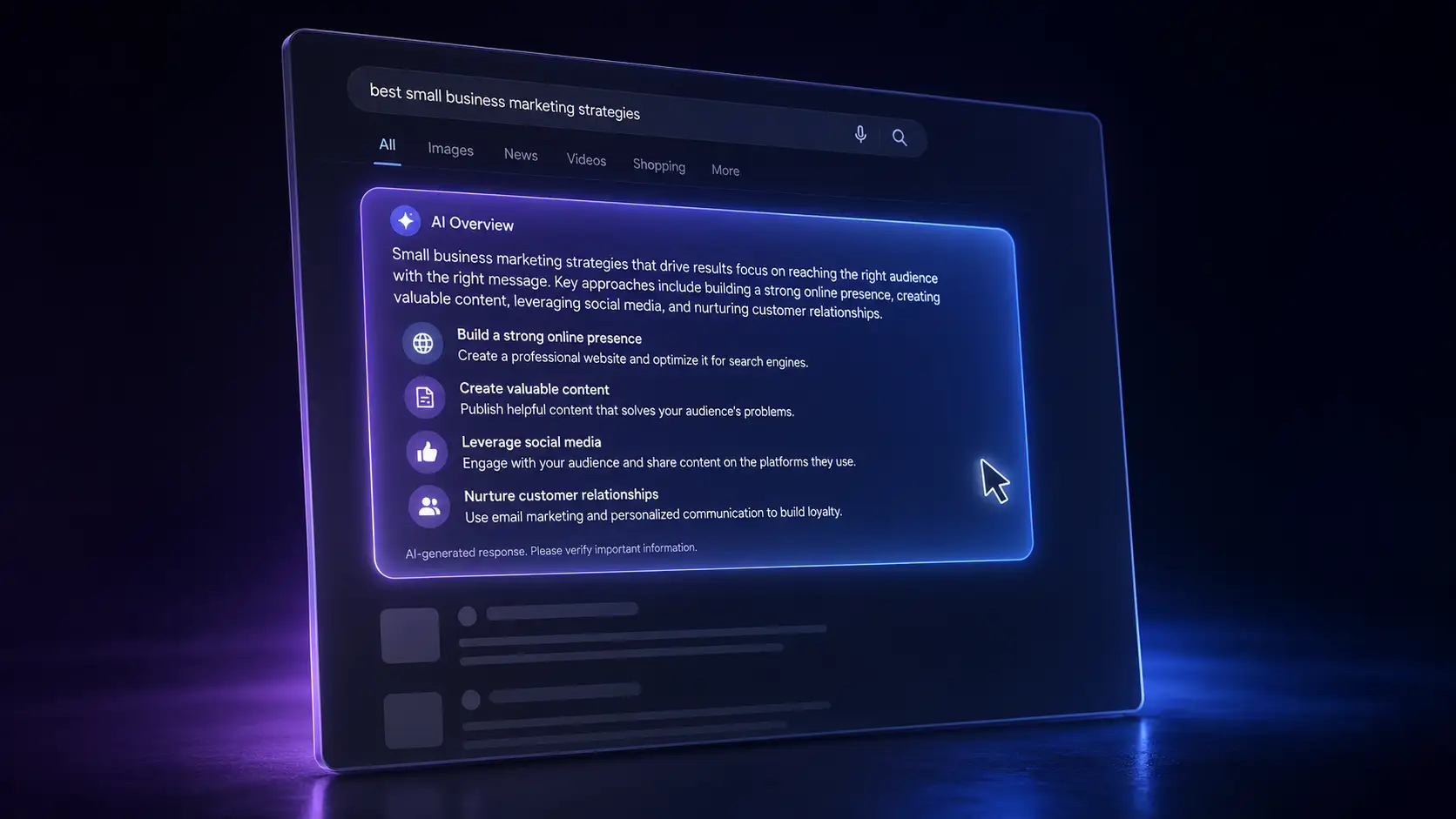
I want to share some data here because this isn’t just an observation; there’s solid research behind what’s happening.
According to a randomized field experiment by researchers at Carnegie Mellon University and the Indian School of Business, conducted in early 2026, Google AI Overviews reduce organic clicks by 38% on the searches where they appear. That’s nearly 4 in 10 clicks, gone.
Other studies put the number even higher. Ahrefs data shows that for the top-ranking page on any keyword that triggers an AI Overview, CTR drops by up to 58%.
And here’s the most sobering number: right now in 2026, approximately 65% of all Google searches end without a single click to any website. That’s up from around 50% just a few years ago.
Let that sink in: nearly two out of every three people who search on Google never visit a website.
For businesses and website owners who have built their entire online presence around ranking on Google, this is a structural shift, not a temporary blip.
Which Niches Are Getting Hit the Hardest?
Not all industries are equally affected. Here’s what I’m seeing and what the data shows.
Heavily Affected
Home builders and real estate are in an interesting spot. General informational queries like “how much does building a home cost in Melbourne” or “what to look for in a home builder” are exactly the type of content AI Overviews love to summarize.
Impressions stay high because Google still considers the site relevant, but the click never comes because the AI answered the question already.
Legal and financial services are seeing the same pattern. “How to make a will,” “what is a trust fund,” “how does home loan approval work”, Google now answers all of these with an AI summary at the top.
Health and medical content is one of the most affected categories, with some studies showing over 40% AI Overview coverage on health-related queries.
Digital marketing and SEO content, yes, the very niche I create content in, is heavily targeted by AI Overviews. How-to guides, SEO explanations, tool comparisons. AI summarizes all of it.
Education and how-to content broadly, blog posts that explain things, tutorials, guides. These were the backbone of content marketing for years. They’re now being replaced, at least partially, by AI-generated answers.
Relatively Safe For Now
Local service searches, “plumber near me,” “home builder in Melbourne,” “dentist in [suburb]”,
Google still shows traditional local pack results for these. AI Overviews don’t appear as often on hyper-local, service-intent searches. This is actually good news for local businesses when it comes to local keyword targeting.
E-commerce and transactional searches, “buy running shoes,” “iPhone 16 price,” “book hotel Melbourne”, only around 4% of e-commerce searches trigger AI Overviews. When someone wants to buy something, Google still sends them to a website.
Branded searches, when someone searches your brand name directly, AI Overviews rarely appear. This is why building brand awareness is becoming a critical part of SEO strategy in 2026.
So, is SEO Dead?
No. And I want to be clear about this because there’s a lot of panic in the industry right now.
SEO isn’t dead. But the rules have fundamentally changed.
For the past 15+ years, the SEO playbook was straightforward: rank higher = get more clicks = get more traffic. That direct equation is breaking down.
In 2026, the new reality looks more like this:
- Ranking ≠ traffic for informational content
- Impressions ≠ clicks when AI Overviews are present
- Visibility and traffic are now two separate metrics
The goal has shifted. It’s no longer just about ranking on page one. It’s about being the source that Google’s AI chooses to cite inside those AI Overviews, and it’s about making sure your content attracts the types of clicks that AI can’t absorb.
What You Should Actually Do About It
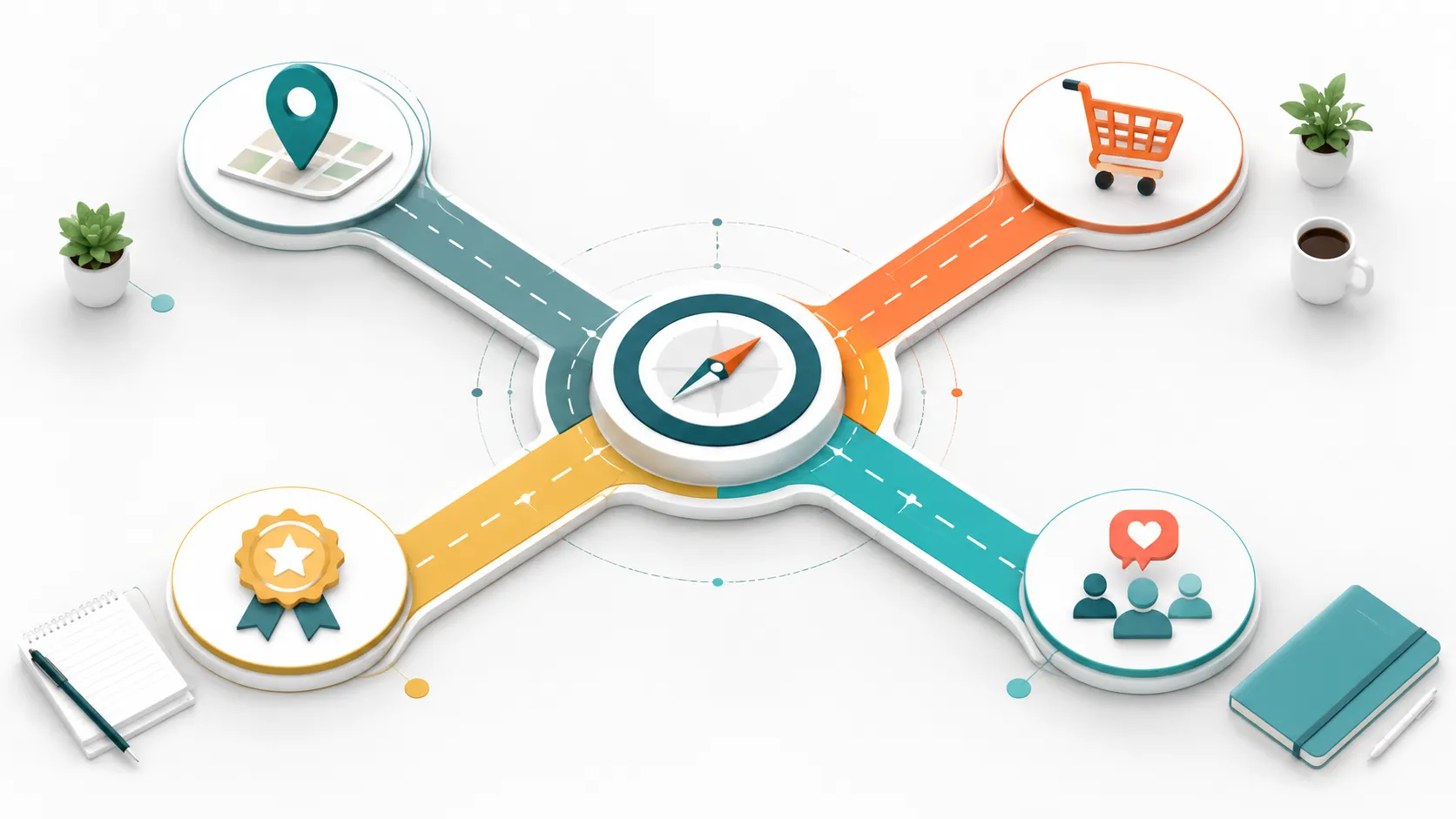
Here’s what I’m doing for my clients and what I’d recommend you think about, too.
1. Shift Focus to Transactional and Commercial Keywords
If you’re a service business, stop pouring all your energy into informational keywords like “how to choose a home builder”; AI is taking those clicks. Instead, target keywords where the user is clearly ready to take action:
- “Home builders Melbourne quote.”
- “custom home builder Melbourne contact”
- “home building companies Melbourne reviews”
These searches signal buying intent, and Google doesn’t replace them with an AI answer because the user needs to actually go somewhere to complete the action.
2. Double Down on Local SEO
For businesses, local SEO is genuinely one of the safest places to be right now. AI Overviews have minimal impact on local searches. Keep your Google Business Profile updated, collect reviews consistently, build local citations, and you’re largely protected from what’s happening with zero-click search.
3. Optimize Your Content to Be Cited in AI Overviews
Here’s something most people miss: if you can’t beat AI Overviews, get inside them.
Websites that are cited as sources inside AI Overviews actually get 35% more organic clicks than websites that aren’t cited at all, according to recent data. Being cited means Google trusts your content enough to reference it, and some users do click through to read more.
To get cited:
- Write content that directly answers questions clearly and concisely at the top
- Use proper heading structure (H2s, H3s)
- Add FAQ sections to your articles
- Make sure your E-E-A-T signals are strong, author bio, real experience, and genuine expertise
4. Build Audiences That Don’t Depend on Google
This is the bigger, longer-term lesson. The businesses that are least affected by zero-click search right now are the ones that built their audiences through email lists, YouTube channels, social media, and communities before this happened.
If Google stops sending you traffic tomorrow, what do you have? If the answer is nothing, that’s the real problem to solve.
I’m not saying abandon SEO. I’m saying diversify. Build an email list. Post on social consistently. Create YouTube content. Think of Google as one channel, not the only channel.
The Silver Lining Nobody Is Talking About
One thing I keep telling clients, and this surprised even me when I first saw the data, is that the clicks that do come through AI Overviews are higher quality.
When AI Overviews appear, fewer people click. But the people who do click have already read the AI summary, and they want to go deeper. They’re not casually browsing. They’re genuinely interested.
Research shows that these clicks convert 23% better than traditional organic traffic.
So yes, total click volume is down. But the visitors who still find their way to your website are more intentional, more informed, and more ready to take action.
For a business like my home builder client, this actually matters more than raw traffic numbers. One serious lead from an engaged visitor is worth more than 100 casual clicks that bounce immediately.
What I’m Watching Going Forward
Google’s AI Mode, an even more aggressive version of AI Overviews, is being rolled out and tested in 2026. Early data shows zero-click rates of over 90% on AI Mode queries. This trend is not slowing down.
But here’s what I believe: the fundamentals of good SEO still apply. Strong technical foundations, genuine expertise, real experience, content that actually helps people, these things matter more now, not less. Because AI needs sources, and it picks the best ones.
The websites that will win in this new landscape are the ones that are genuinely authoritative. Not the ones that gamed the system with keyword stuffing and thin content.
If you’ve been doing SEO the right way, you’re in a better position than you think. You just need to adjust your strategy to match where search is going.
FAQs
What is Google AI Overview?
Google AI Overview is an AI-generated summary that appears at the top of Google search results, pulling information from multiple websites to answer a user’s query directly on the results page, without the user needing to click on any website.
Why is my website traffic dropping even though rankings are stable?
This is most likely due to Google AI Overviews. When an AI Overview appears for a keyword you’re ranking for, it answers the user’s question before they see your link, reducing clicks even if your ranking hasn’t changed. Studies show this can cut organic CTR by 38–58% on affected keywords.
Does zero-click search affect local businesses?
Less so than other businesses. Local searches like “service provider near me” or “business name in [city]” are less frequently targeted by AI Overviews. Local SEO remains one of the more stable strategies in 2026.
How do I get my content featured in Google AI Overviews?
Write clear, well-structured content that directly answers questions. Use proper heading tags, include FAQ sections, cite credible sources, and build your E-E-A-T (Experience, Expertise, Authoritativeness, Trustworthiness). Websites that are cited inside AI Overviews receive 35% more clicks than those that aren’t.
Is SEO still worth investing in during 2026?
Absolutely. SEO is evolving, not dying. The focus is shifting from pure traffic volume to authority, brand visibility, and being a cited source in AI-generated answers. Pair this with local SEO, transactional keyword targeting, and audience building across other channels for the best results.