Do you know if ChatGPT is recommending your business? Or whether you show up in Google AI Overviews, Gemini, or Perplexity?
Most business owners have no idea. And you cannot improve what you cannot see. Your customers are no longer only on Google; they are asking AI tools for recommendations, and if you are invisible in those answers, you are losing customers you will never know about. Once you can see where you stand, the next step is getting your business cited by ChatGPT and other AI tools, but it all starts with tracking.
The good news is that tracking your AI visibility is not complicated, and you can start for free. Here is exactly how, and which numbers are actually worth watching.
Why AI Tracking Works Differently
One thing you need to understand first, because it changes how you track.
Traditional rankings are stable. If you rank third for a keyword, you rank third tomorrow too. AI is different. Ask ChatGPT the same question twice, and you can get two different answers. Your business might appear in one and be missing from the next.
This means a single check tells you almost nothing. What matters is how often you appear across many checks, not whether you showed up once. Keep that in mind for everything below.
Start With the Free Methods
You do not need to pay for anything to begin. Do these first.
Manual prompt checks. Open ChatGPT, Gemini, and Perplexity, and ask the questions your customers actually ask, like “best dentist in Newark” or “emergency plumber near me.” Do not ask once. Ask a few times, ideally logged out or in an incognito window, since answers vary and your own history skews results. If you appear in four out of five answers, that is real visibility. Once out of ten was luck. If you want to go deeper on this for Google specifically, I covered how to check if Google is citing your website in AI Overviews in a separate guide.
Google Search Console. AI Overview and AI Mode data is now included in the Performance report. Watch for queries where your impressions stay strong but your click-through rate drops. That pattern usually means an AI Overview is answering the question before people reach your link.
Your business signals. For a local business, your Google Business Profile insights show calls, direction requests, and website clicks. If these hold up while rankings stay flat, AI and local search are quietly working for you. This is also why keeping your profile strong matters so much, something I break down fully in my guide on how to optimise your local SEO for AI search.
The Metrics That Actually Matter
Ignore vanity numbers. These are the ones worth your attention.
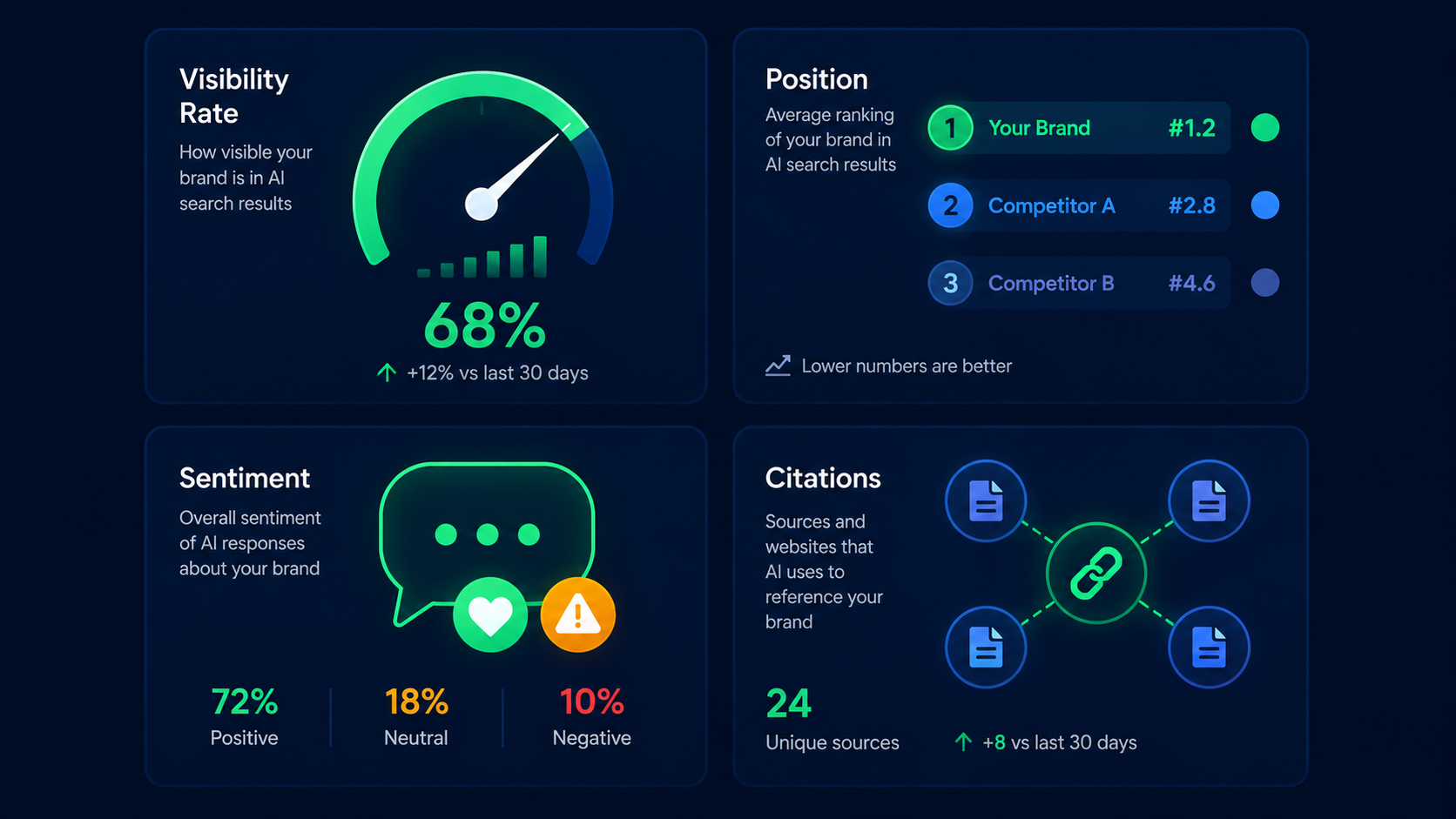
Visibility rate. How often you appear in AI answers for your key questions. Track ten important questions, and if you show up in six consistently, that is a 60% visibility rate. This single number, tracked over time, is the closest thing to a ranking in AI search.
Position. Being mentioned first is far better than being buried at number eight. Track where in the answer you appear, not just whether you appear.
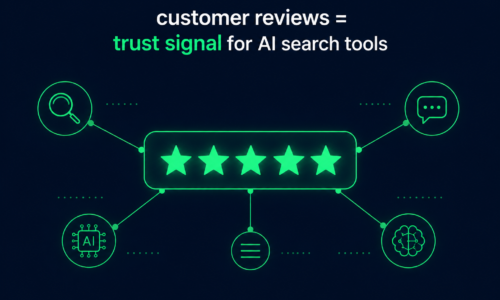
Sentiment. Not just if AI mentions you, but how it describes you. “Highly rated and reliable” versus “some complaints about wait times.” AI builds this from your reviews and what other sites say, so if you do not like the description, that tells you which sources to go fix.
Citations. When AI recommends businesses like yours, which sources is it pulling from? Directories, review sites, specific blogs? That shows you exactly where to focus your effort.
One to be careful with: traffic. AI badly under-reports in analytics. When someone finds you through ChatGPT, there is often no link to click, so they Google you or type your site directly, and your analytics credits Google or direct instead of the AI. Your real AI influence is almost always bigger than it looks. A simple fix is a “how did you hear about us” question at enquiry.
When to Use a Paid Tool
Paid tools mainly save time and track more systematically. Reach for one only when you have outgrown checking by hand. The right one depends on who you are.
Small businesses can start cheap with tools like Otterly AI or Rankscale AI. If you care mainly about Google AI Overviews, ZipTie is focused there. If you already pay for Semrush or Ahrefs, use their AI visibility features before buying anything new. Agencies managing many clients need dedicated platforms built for reporting and scale.
One honest warning: pricing in this space changes constantly, and new tools launch every month. Always check current pricing, and never buy a tool just because it shows a nice score. A dashboard you never act on is wasted money.
A Simple Monthly Routine
Pick your ten most important customer questions. Once a month, ask each across ChatGPT, Gemini, and Perplexity a few times, and note how often you appear and where. Check your Search Console for that impressions-versus-clicks pattern, and your Business Profile for calls and directions. Write it all in a simple spreadsheet.
Do that consistently and within a few months you will have something almost no competitor in your market has: a real, tracked picture of your AI visibility over time, so you can actually see whether your efforts are working.
The Bottom Line
AI search is already shaping who your customers choose, often before they ever reach your website. You do not need an expensive tool to begin. Start with the free methods this week, pick your ten questions, watch your Search Console, and write it down. Add a paid tool only when you have genuinely outgrown doing it by hand.
The biggest mistake is waiting for perfect measurement before you start. Every month you are not tracking is a month you cannot prove your work is paying off.
I’m Sawan Jha, an AI SEO and local SEO specialist, and I share practical resources like this from real client work. If you want help setting up a tracking routine for your business, subscribe to my email list, and I’ll send you the templates and guides as I put them together.
FAQs
How often should I check my AI search visibility?
For manual checks, once a month is enough for most small businesses, as long as you check each question several times in that session to account for the randomness. In a competitive market, every two weeks is better. Paid tools can track continuously in the background, which is one of the main reasons to eventually invest in one.
Why do I show up in ChatGPT one day and not the next?
Because AI tools are non-deterministic, meaning there is a natural randomness in how they generate answers. The same question can produce different results each time. This is normal, and it is exactly why you should never judge your visibility on a single check.
Can I track AI visibility for free?
Yes, and you should start there. Manual prompt checks across ChatGPT, Gemini, and Perplexity, plus your Google Search Console and Google Business Profile data, cost nothing and tell you a great deal. Paid tools mainly save time, but they are not required to begin.
Which metric matters most if I only track one thing?
Your visibility rate, meaning how often you appear in AI answers for your most important customer questions. That single number, watched over time, is the closest thing to a ranking in AI search.
Does traffic from AI show up in Google Analytics?
Mostly not. AI often sends no clickable link, so people discover you through AI and then Google your name or type your site directly, and your analytics credits Google or direct instead. Your real AI influence is almost always larger than your analytics suggests.