You’ve probably seen the term GEO everywhere in the last year, usually paired with a claim that SEO is dying and you need an entirely new strategy to survive. That’s not quite right, and the confusion around it is doing more harm than good. Let’s clear it up properly.
What SEO Actually Is
Search Engine Optimisation is the practice of getting your website to rank well in traditional search results, the list of blue links Google shows when someone searches a term. It’s built around keywords, backlinks, site structure, and content quality, all aimed at earning a high position on the results page so people click through to your site.
This has been the foundation of online visibility for over two decades, and it still is. Nothing about GEO makes SEO obsolete, which is the first myth worth clearing up before we go any further.
What GEO Actually Is
Generative Engine Optimisation is the practice of getting your content referenced, cited, or summarised by AI tools like ChatGPT, Gemini, Perplexity, and Google’s AI Overviews when they generate an answer to a question.
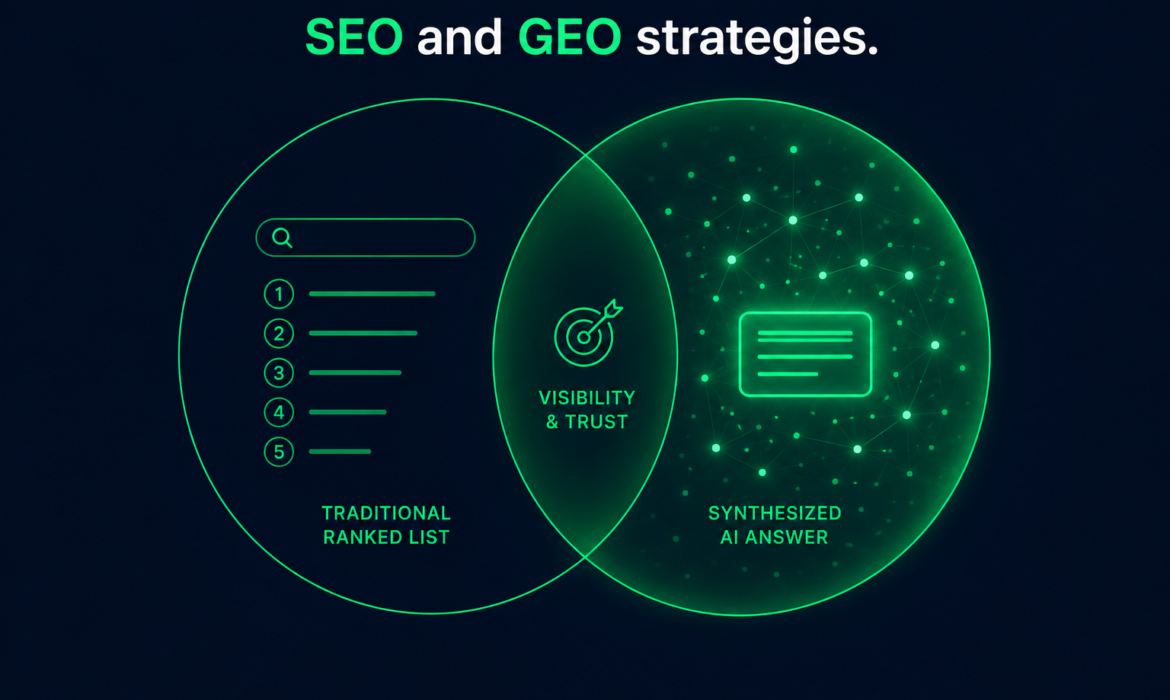
The key difference is what you’re actually competing for. With SEO, you’re competing for a ranking position, a spot on a list. With GEO, you’re competing to become part of the answer itself, one of the sources an AI system pulls from, synthesises, and sometimes names when it writes its response.
You’ll also see the term AEO, Answer Engine Optimisation, thrown around in the same conversation. It’s related but not identical; AEO is more specifically about zero-click answer formats like featured snippets and voice search results. For this article, I’m keeping the focus tight on GEO vs SEO specifically, since folding three terms into one explanation is exactly what makes this topic confusing in the first place.
Where They Overlap Heavily
Here’s what most of the hype around GEO gets wrong: it’s not a replacement discipline built from scratch. It leans on many of the same fundamentals SEO already established.
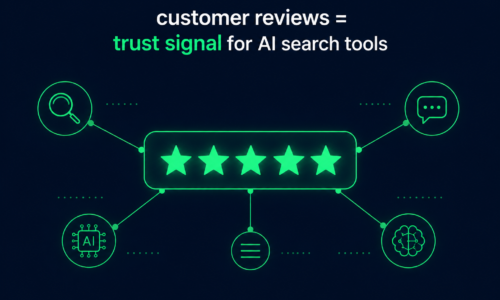
Clear, well-structured content still matters. Technical cleanliness still matters, and this is where schema markup plays a role in both worlds; it helps traditional search engines parse your site and helps AI tools extract accurate facts about your business at the same time. Authority and trust signals still matter, which is part of why genuine, recent reviews carry weight in AI-generated answers, not just star ratings on a search listing.
If you’ve been doing SEO properly- honest content, clean structure, real authority signals- you already have most of the foundation GEO needs. That’s the part the “SEO is dead, GEO is the future” narrative conveniently skips.
The Real Differences That Matter

That said, there are genuine differences, and pretending there aren’t would be dishonest.
What you’re optimising for. SEO rewards ranking position. GEO rewards being selected as a trustworthy source to synthesise from, which means being accurate, specific, and well-organised matters more than keyword density ever did.
How content gets structured. SEO content is often built around a single target keyword and a ranking-friendly format. GEO-friendly content tends to answer questions directly and clearly, with facts an AI system can lift confidently and attribute correctly, which is a different writing discipline even when the topic is the same.
How you measure success. A ranking position is easy to track. Being cited inside an AI-generated answer is not, and this is genuinely one of the harder parts of GEO right now. If you want to actually understand this half of the equation, I’ve written separately about checking whether Google is citing your website in AI Overviews and how to get cited by ChatGPT specifically, both worth a look if this is the part you’re stuck on.
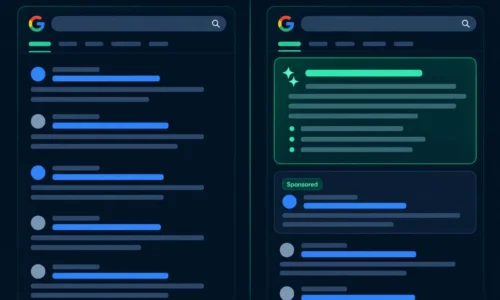
Where the SERP itself has changed. Even the traditional search results page now blends the two. Features like Featured Snippets and AI Overviews sit right next to each other, sometimes contradicting one another, and understanding the actual difference between the two is genuinely useful if you want to know where to focus.
What This Actually Means for Your Business
Here’s the practical answer, because I’d rather give you something decisive than another “it depends” conclusion.
For most businesses, GEO is not a separate strategy you need to build from zero. It’s a set of specific practices layered on top of the SEO work you’re likely already doing, or should be. If your content is honest, well-structured, and backed by real trust signals, extending that work to be AI-readable is a much smaller lift than the hype suggests.
Where it does require deliberate effort is in a few specific areas: making sure your business facts are structured cleanly enough for AI systems to parse without guessing, building the kind of authority and review presence that makes an AI tool comfortable citing you, and understanding how local search factors into this if AI-driven recommendations matter for your business. I’ve written about that side of it in how to optimise your local SEO for AI search, which is worth reading next if that applies to you.
What it doesn’t require is throwing out your existing SEO work and starting over. Anyone telling you that is selling you something.
Where to Go Deeper
This article is meant to be the starting point, not the whole picture. If you want to go further into any specific piece of this, here’s where I’d point you:
- llms.txt explained: should your website have one? – a myth-busting look at one of the most misunderstood GEO-adjacent topics right now.
- How to track your AI search visibility – the tools and metrics that actually matter for measuring the GEO side of things.
- How to protect Local Seo in the age of AI overviews — why local search is holding up differently than the rest of SEO right now.
The Bottom Line
SEO and GEO are not rivals, and neither one is dying to make room for the other. SEO gets you found. GEO gets you cited. Most businesses need both working together, built on the same foundation of honest, well-structured, trustworthy content. Stop thinking of this as a choice you have to make, and start thinking of it as one strategy with two visibility outcomes.
If this kind of clear-headed breakdown is useful, follow along; I write about exactly this stuff.